
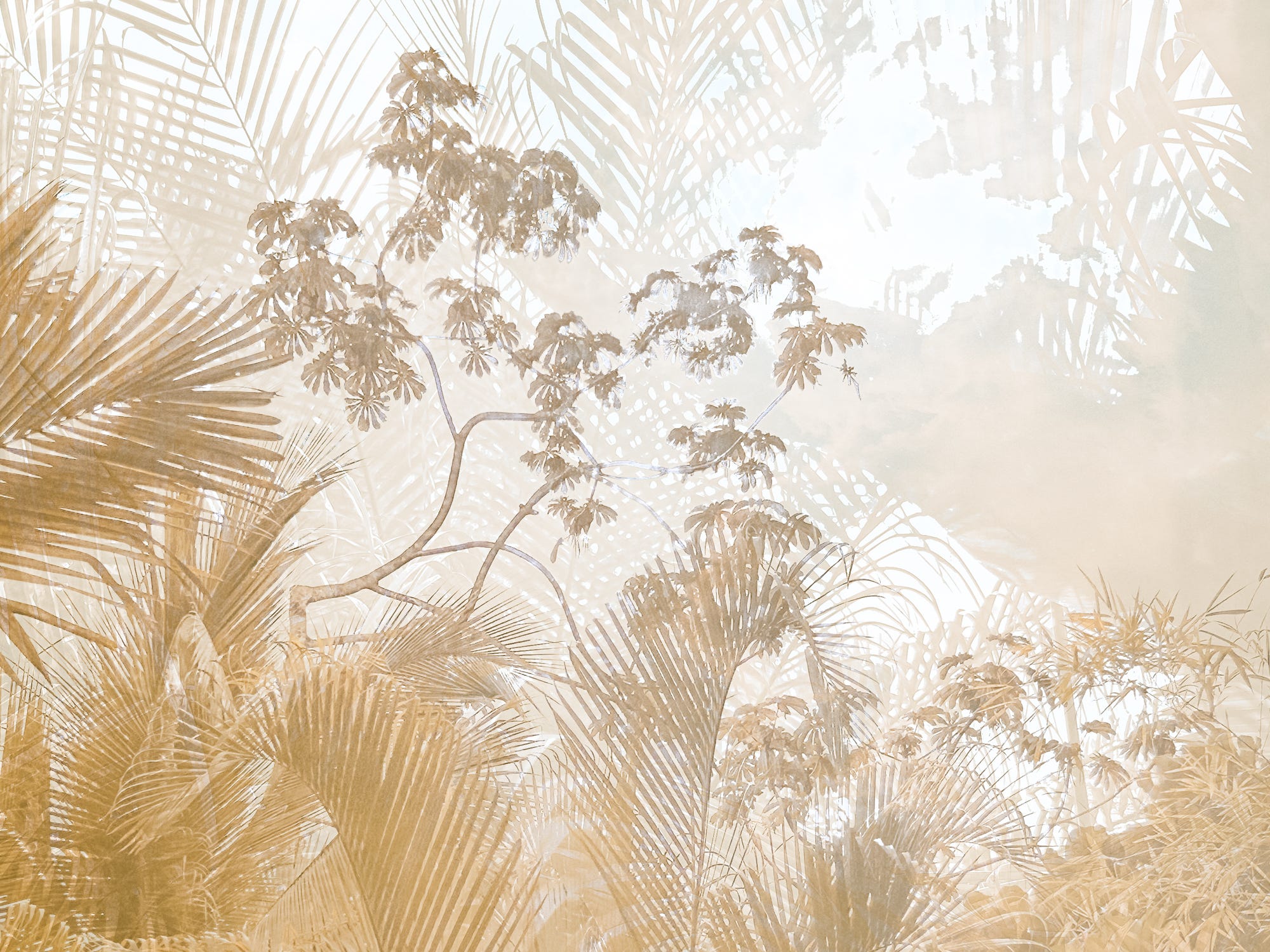
Lately I have been thinking a great deal about sustainability.
Not ecological sustainability, though that matters deeply to me as well.
I mean the sustainability of attention. Of cognition. Of nervous system capacity.
Since recently receiving a late diagnosis of autism, I have become acutely aware of how differently energy distributes itself in my life. I seem to have endless capacity for research, artistic inquiry, pattern recognition, and conceptual exploration—and remarkably little for many ordinary demands of daily living.
It is reassuring to know that brain fog, forgetfulness, and a host of other long-held concerns are not the beginnings of cognitive decline, but patterns that have been present all my life. I simply did not recognize them for what they were. The last few months have involved a plethora of tests and assessments, but I am deeply grateful to have discovered this part of myself, as it has profoundly informed the way I understand my experience in the world.
During the months of assessment, I found myself making work in order to understand what was happening. As I often do, I turned toward materials before language. Later, I found I could express the experience more directly through a written project statement.
Fragments of memory began to gather into pattern. Experiences once held as confusion, sensitivity, or contradiction started to reveal a deeper coherence. What had long felt scattered was not scattered at all—only differently organized.
You can view the full statement and the ongoing project, Coherence, here:
Karen Olson Photography – Coherence
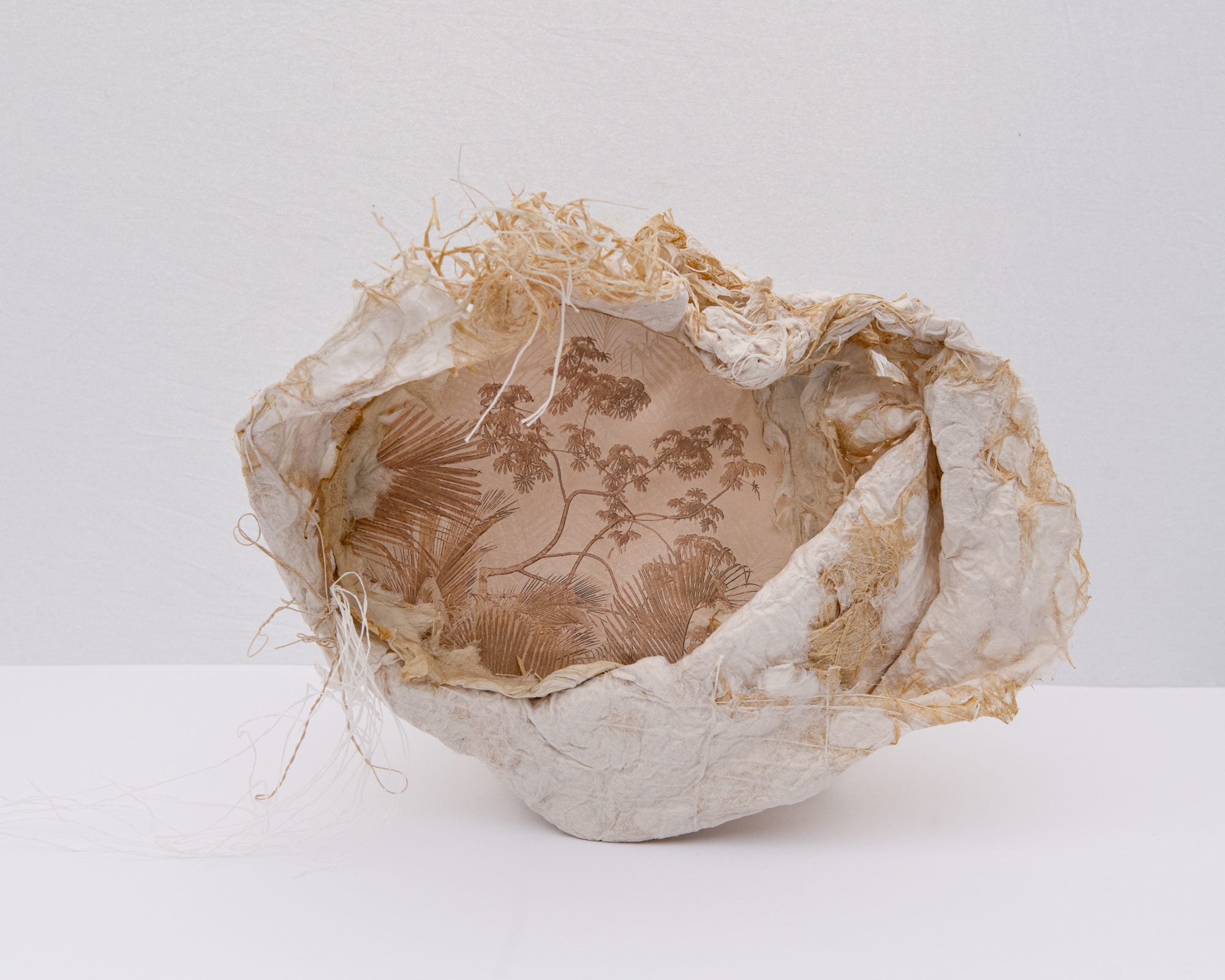
Unfolding - Wall sculpture_ Artist made abaca paper with Himalayan Balsam Lace paper inclusion, pigment print on kozo paper, cold wax, linen thread
As I move through the world with this new lens, I am beginning to understand structure not as restriction, but as a form of support—a flexible architecture that allows me to remain open rather than overwhelmed.
Planning helps me externalize what my mind cannot reliably hold on its own. It gives shape to time. It reminds me what matters now and what can wait until later.
My daily plan helps me remember what needs attention, the order of importance, and the flexibility to shift things from hour to hour or day to day. This structure creates a sense of grounding for me and supports my proprioception, something I often struggle with.
I am also realizing that I need daily routines that allow time for open-ended play.
I used to set aside one morning or one day each week for play. If I powered through several days of responsible work, I could reward myself with a play day. But it was not enough. Not enough cognitive rest to sustain what I was trying to accomplish in my creative life.
Five hours of administrative work must be balanced with three hours of play, at least. Otherwise, burnout ensues. When I make time for rest, I am actually more productive in less time, and the work itself feels more enjoyable.
I did not need more time. I needed more time to play.
My planner now holds two distinct categories for each day:
responsibilities and play.
Responsibilities are the tasks that require sustained cognitive effort—the administrative, logistical, and organizational work that often drains me.
Play is something else entirely. Time outside. Gardening. Experimentation without outcome. Art-making without productivity attached to it. Sitting quietly enough to watch the more-than-human world continue on without asking anything of me, and without my asking anything of it.
I recently heard a conversation between Shankar Vedantam and Dave Evans that stayed with me. Evans spoke about the impossibility of fully actualizing every potential self within a single lifetime.
Human capacity, he suggested, exceeds the scope of human life itself.
“You can’t be all you can be,” he says.
“Now, can I be fully who I’m trying to be right now?”
Mentally and cognitively, we have the ability to imagine and pursue many different directions. But it is impossible to pursue them all. Pushing ourselves beyond our capacity to the point of burnout is not a sustainable way to live.
So these days I keep asking myself quieter questions.
Have I made time for play today?
Have I sat still long enough to notice something alive around me?
Have I done nothing, even briefly?
Have I nourished myself with delight rather than only productivity?
I am beginning to think this, too, is sustainability.
Not how much we can produce, but how gently and honestly we can remain in relationship with our own aliveness.
*The conversation between Shankar Vedantam and Dave Evans can be found on the Hidden Brain podcast here.
I am deeply grateful for your attention and presence here. Thank you for walking alongside these reflections with me.
Designing What Holds: Structure, Rhythm, and Creative Sustainability
Our May salon-style gathering will explore the forms and patterns that support a sustainable creative life. Together, we’ll consider how structure can act not as constraint, but as a kind of holding—something that steadies the work and allows it to continue.
This will be a reflective and interactive session, with space for shared conversation and quiet noticing.
Thursday, May 28, 2026
1:00 pm EST
We gather as a small group. Sessions are not recorded in order to support presence and connection, though a PDF of the material will be shared afterward.
Paid subscribers are warmly invited to join these monthly gatherings as part of the Rivers Speak in Voltage community. If you are currently a free subscriber and would like to participate in future salons, tutorials, and community discussions, you can upgrade your subscription below. You will find the link to register for the meetup in the community chat.
Offerings
Paper Sculpture Retreat - Italy
This post opened my mind in a lovely, self- and other-affirming way. Thank you; I'll be reading it more than once. (Beautiful, beautiful piece, too.)
I can relate to this article. Thank you for sharing