
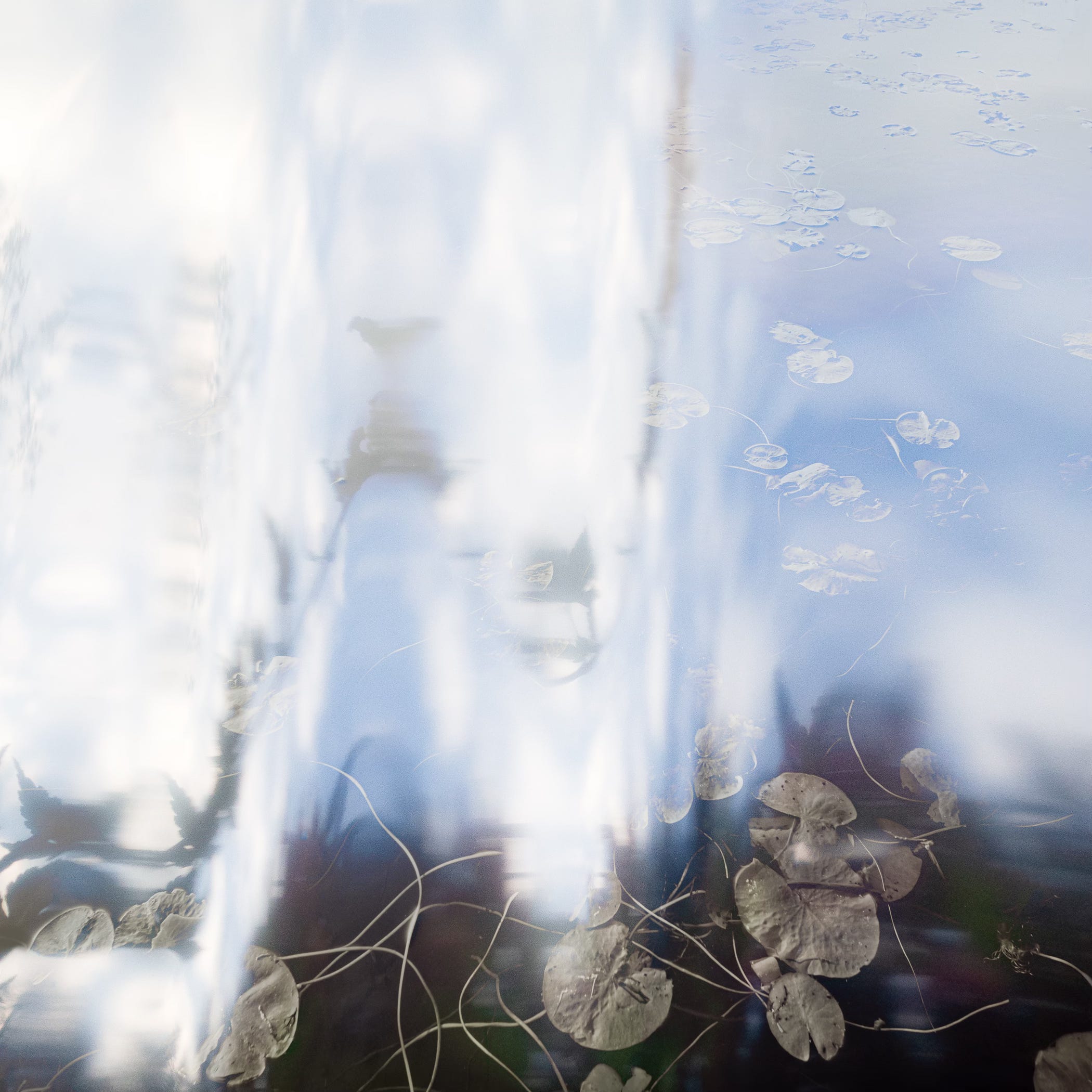
About six years ago, during a time of profound grief, I began walking the forest trails near my home. At the same time, I was researching anxiety, and I happened upon a book on forest bathing. Curious, I decided to test some of the theories that link time in nature with improved mental health. I documented my experience and whether or not my mental health and resiliency improved after time in the forest.
Walking alone with my camera, I moved slowly, taking in the nuances of light, atmosphere, and sound, allowing my senses to fully awaken. I was amazed by how much my well-being improved after just one hour of focused, attentive presence in the forest. Even once a week made a significant difference.
I discovered that there is in fact a friendship among trees. This friendship is multifaceted. When trees converse, the air becomes charged with chemical substances, fragrances, hormones, and subtle electrical connections. When I place myself in the middle of this conversation, I am illuminated by it. The charged atmosphere infuses me with a sense of well-being—emotionally, physically, and spiritually. I feel surrounded by the empathy that is the forest.
Last year, as I began speaking and teaching about our human-nature connection, I felt called to study with the Association of Nature and Forest Therapy Guides. During the certification course, I encountered the term heart sense. I instantly recognized the feeling—this intimate, resonant connection with the natural world—and knew it was more than just emotion or cognition. I wanted to understand it. What exactly was this sense? Could it be cultivated? Could someone learn to attune to it more deeply? Could it be articulated? Was anyone exploring it?
This curiosity led me into the writings of Stephen Harrod Buhner, Ben Page, Amos Clifford, and emerging research on the electrical and magnetic qualities of the physical heart. Stephen Buhner, in particular, has written extensively about the heart sense and plant intelligence—ideas I find endlessly fascinating.
Buhner writes:
“The tendency for heart cells to entrain with one another, merely because of the proximity of their electromagnetic fields, extends to any electromagnetic field that comes into contact with them. Just as the electromagnetic fields of two heart cells cause them to begin beating or oscillating in unison, when the electromagnetic fields of two hearts come together, they also begin to oscillate or entrain to each other. But this phenomenon extends even further. When the heart’s electromagnetic field and any other organism’s electromagnetic field—whether it has a ‘heart’ or not—are in close proximity, the fields entrain or synchronize, and there is an extremely rapid and complex interchange of information. As the two fields harmonize with one another, shifts occur in each electromagnetic field, producing significant alterations in the physiological functioning of each organism. For not only does each electromagnetic field alter, but the information embedded within each field is also taken in by the receiving organism.”
Recent research shows that the heart contains neurons similar to those in the brain, with more neural pathways traveling from the heart to the brain than from the brain to the heart. This two-way communication shapes our perception of the world. As we encounter our surroundings, the heart receives, encodes, and communicates information, maintaining a constant dialogue with the brain. Through its ability to both send and receive electromagnetic energy, the heart acts as a true organ of perception.
What this means is that when we connect with the natural world—simply by being near other beings—our “hearts” begin to beat in unison. They entrain. They synchronize. How incredible is that? And it doesn’t matter whether these more-than-human beings possess a physical heart. They exist as open energy systems, continually interacting with other energy systems, including ours.
The heart sense is not a metaphor, nor is it elusive or abstract. We feel it tangibly in the body and understand it in the deepest parts of ourselves. It is music and rhythm—the pulse of existence. It is our capacity to feel, connect, learn from, and understand beings beyond ourselves.
This sense represents a unique form of intelligence that extends beyond our five conventional senses. Through intentional sensory experience, we can cultivate a heart-centered awareness that reveals our deep kinship with the living world. This inner knowing awakens intuition and imagination, drawing us toward a more coherent and reciprocal relationship with our surroundings.
In cultivating the heart sense, we become known by other beings—and in turn, we come to know them more deeply.
Thank you for this very interesting article, I loved it and look forward to your next post
Thank you for sharing. 🙏